Jun 26, 2026Capacity Guide
Is a 1024Wh Portable Power Station Enough for Camping?
A practical data-backed guide to 1024Wh camping runtime, device charging estimates, solar top-ups, and when to choose a smaller or larger power station.
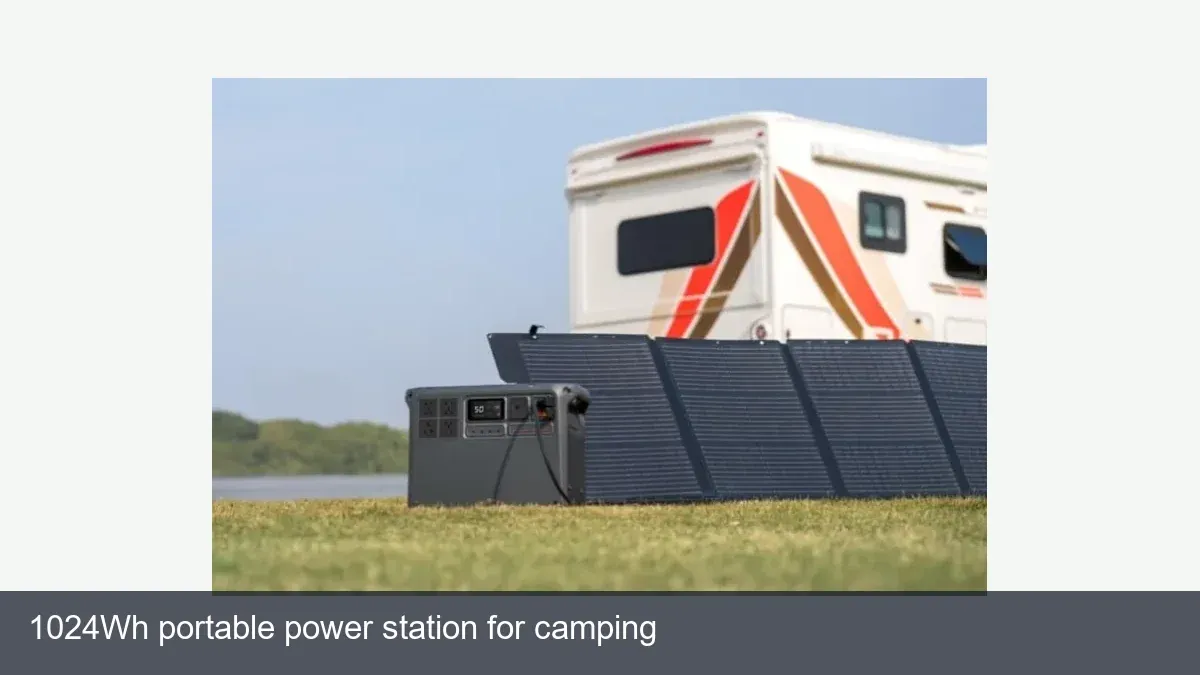
Is a 1024Wh Portable Power Station Enough for Camping?
A 1024Wh portable power station is enough for most weekend camping, RV parking, camera work, laptop charging, camp lighting, and short backup routines. The useful answer depends on numbers: device watt-hours, running watts, inverter loss, fridge cycling, and whether you can recharge during the trip.
The mistake is treating watt-hours as a simple bigger-is-better number. A 288Wh station can be perfect for phones and lights. A 512Wh station can cover a light weekend kit. A 1024Wh station becomes useful when several devices run in the same trip: fridge, laptop, camera chargers, drone batteries, lights, router, CPAP, or compact cooking gear. A 1536Wh station makes more sense when backup time matters more than carrying weight.
Portable Power Demo's Base 1000 sits in that middle band: the product page lists 1024Wh capacity, 2200W-class stable AC output, AC / vehicle / solar input support, and fast AC charging in about 70 minutes. That makes it the right product to use as the example for this guide.
Quick Answer
Choose a 1024Wh-class station when your trip includes one or more higher-demand devices, or when several small devices need to run across one or two days.
Use this rule:
Situation | Better fit |
|---|---|
Phones, small lights, one camera, day trip | |
Weekend camping with lights, laptop, camera gear, small fridge, router, or drone batteries | |
RV parking, creator kit, longer backup window, multiple AC devices | |
Home backup for large appliances or longer outages |
This is why the Base 1000 should not be framed as "the biggest option." Its strongest role is the balanced option: enough capacity and AC output for mixed camping loads, without pushing every buyer into a heavier high-capacity station.
What 1024Wh Means in Real Use
Watt-hours are the fuel tank. Watts are the speed at which that tank drains. A 1024Wh battery does not always deliver the full 1024Wh to every device because AC inverter loss, USB conversion, temperature, battery protection settings, and cable loss all matter.
For planning, use a conservative working budget instead of the headline capacity:
- Headline capacity: 1024Wh
- Conservative usable planning range: about 700Wh to 850Wh for many mixed camping loads
- Runtime formula: usable watt-hours divided by device watts
- Recharge formula: usable watt-hours divided by device battery watt-hours
That range is not a lab claim. It is a field planning range that leaves room for inverter loss, device charging loss, temperature, and the fact that most buyers do not want to drain the station to zero.
1024Wh Runtime Table
Use the table below as a practical estimate for a 1024Wh-class station such as the Base 1000. Phone and laptop rows are counted as full recharges. Fridge and light rows are counted as runtime.
Device | Power | Estimated runtime with 1024Wh |
|---|---|---|
Phone | 10Wh per full charge | 70-80 charges |
Laptop | 60Wh per full charge | 12-14 charges |
Mini fridge | 40-60W cycling | 12-24 hours |
LED light | 10W | 70+ hours |
The table explains why 1024Wh works well for a mixed camping kit. It is not only about one device. A weekend setup might include one fridge overnight, two laptop charges, multiple phone charges, LED lighting, and camera batteries. A smaller station can handle some of those jobs; the 1024Wh class gives enough margin to combine them.
Example Weekend Load
Here is a realistic one-night or two-night camping calculation:
Load | Estimate |
|---|---|
Mini fridge overnight | 300Wh to 500Wh |
Two laptop charges | about 120Wh |
Four phone charges | about 40Wh |
LED light for 6 hours | about 60Wh |
Camera, router, or small accessories | 60Wh to 120Wh |
Estimated total | 580Wh to 840Wh |
That total fits the conservative usable range for the Base 1000, especially if you start fully charged and avoid long high-wattage cooking or heating loads. If you add a Solar Panel 120 or Solar Kit 200, daytime top-ups can stretch the same station across a longer trip. For recharge planning, also read the Solar Charging Guide for Camping.
1024Wh vs 512Wh: When the Bigger Station Is Worth It
A 512Wh station is usually easier to carry and good for simple weekend trips. The Trail 500 is a better fit when your kit is mostly phones, lights, camera batteries, and some laptop charging. If your campsite routine is USB-heavy and you do not run a fridge, smaller is fine.
Move to 1024Wh when you want margin:
- a portable fridge or cooler runs through the night
- two laptops or camera kits need charging
- drone batteries are part of the trip
- you want to run lights, router, and communication gear during a short outage
- you want to recharge less often
- you need stronger AC output for occasional higher-load devices
This is where the Base 1000 fits the site's product ladder. Camp Mini 300 and Trail 500 are better for light trips. Base 1000 is better for the mixed kit: camping comfort, RV stops, creator gear, and backup essentials.
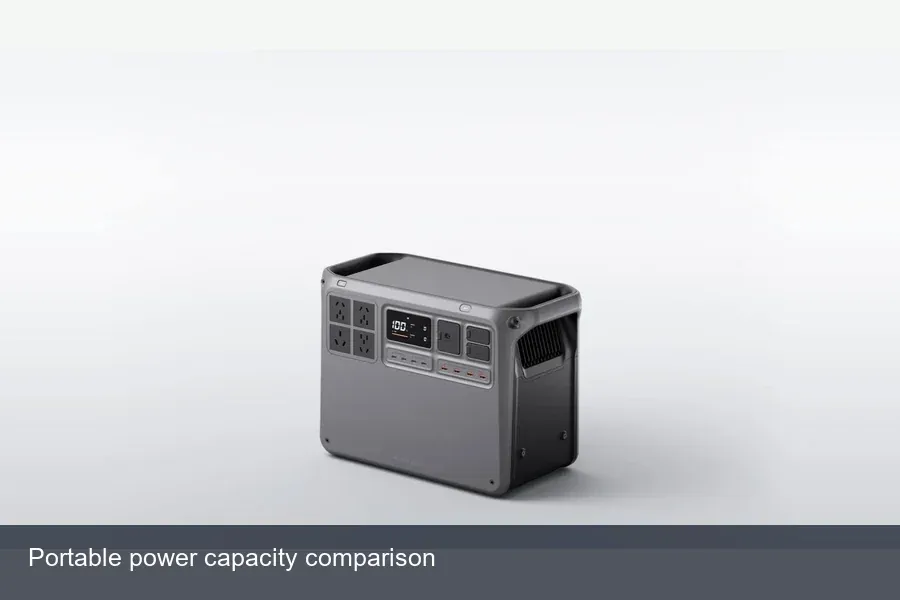
How It Compares With EcoFlow, Anker, Jackery, and BLUETTI
Official competitor pages show that the 1000Wh category is crowded and specification-heavy.
EcoFlow DELTA 2 is listed at 1024Wh, with 1800W AC output and 2200W X-Boost device support. It also highlights 500W solar input, app control, and LFP chemistry rated at 3000 cycles to 80+% capacity.
Anker SOLIX C1000 is listed at 1056Wh with 1800W continuous output, 2400W surge output, 600W solar input, LiFePO4 cells rated at 3000 cycles to 80%, and an 11-port setup.
Jackery Explorer 1000 v2 is listed at 1070Wh with 1500W output, a lightweight 1000Wh positioning, fast charging, and a LiFePO4 cycle-life claim.
BLUETTI AC180 is listed at 1152Wh with 1800W AC output, a 2700W power lifting mode, 500W solar input, LiFePO4 cells, and app monitoring.
The takeaway for your site: do not compete only by repeating a spec table. Buyers can already see big numbers on every brand page. A useful article should help them decide. The Base 1000 page can win by explaining the size choice clearly, then sending the right reader to the right product.
When Base 1000 Is the Right Fit
For camping, it fits a setup with lighting, phones, a laptop, camera batteries, and a small fridge, especially when the trip lasts one to two nights.
For RV stops, it gives a quieter power option for parking, device charging, route planning, and basic comfort loads without starting a fuel generator for every small task.
For field creation, it fits camera batteries, drone batteries, laptops, lights, and monitor charging. The value is not only runtime; it is having one stable hub instead of many small power banks.
For short home backup, it is better for essentials than whole-home loads: communication devices, router, lamps, small medical or work devices where compatible, and basic charging during a short outage.
When You Should Choose Smaller
Do not push every reader into 1024Wh. That makes the guide less trustworthy.
Choose a smaller station when:
- the trip is a day trip
- most devices charge from USB
- you do not run a fridge or AC load
- you need the lightest possible carry
- the budget matters more than backup margin
In those cases, Camp Mini 300 or Trail 500 is easier to explain. The buyer can always pair a smaller station with a Solar Panel 120 for light top-ups, but they should not expect it to behave like a Base 1000 under heavier AC loads.
When You Should Step Up
Choose a larger station when the job is no longer a weekend kit.
- the RV setup includes more AC devices
- the campsite is off-grid for several days
- backup time matters more than portability
- creator work includes lights, laptops, charging cases, and repeated camera batteries
- solar charging may be inconsistent because of shade or weather
The simple rule: 1024Wh is the balanced size; 1536Wh is the margin size.
Do Not Ignore Charging Access
Capacity tells you how much energy you can carry. Charging access tells you how long the setup can stay useful.
Base 1000 supports wall charging, vehicle input, and solar charging. That matters because a 1024Wh station with no recharge plan is still a finite battery. For a one-night trip, charging may not matter much. For a long weekend, solar or vehicle charging can change the routine.
Use this planning path:
- Charge from AC before leaving.
- Use vehicle input while moving between stops.
- Add a Solar Panel 120 or Solar Kit 200 when the station sits outdoors during the day.
- Keep high-wattage heating or cooking loads short.
- Save battery for overnight fridge, lights, communication, and work devices.
That is a more realistic outdoor power plan than buying by capacity alone.
Simple Buying Checklist
Before choosing a 1024Wh portable power station, answer these five questions:
- What must keep running after sunset?
- Which devices require AC output instead of USB-C or DC?
- Will a fridge, cooker, heater, or tool be involved?
- Can you recharge from a vehicle or solar panel during the trip?
- Would a failed battery plan be annoying or genuinely risky?
If the answers are mostly low-stakes and USB-heavy, choose Camp Mini 300 or Trail 500. If the answers include fridge, laptop, camera gear, RV stops, or backup essentials, Base 1000 is the right size to compare first. If the answers include longer outages or multiple AC loads, compare Rover 1500. For a broader product-size overview, see the capacity guide.
Bottom Line
A 1024Wh portable power station is enough for most mixed camping and RV routines, especially when the setup includes several small devices plus one or two higher-demand devices. It is not the smallest option and it is not a whole-home backup system. It is the middle size for people who want a practical power hub without jumping straight to a heavy backup unit.
Start with the Base 1000 if your camping, creator, or RV kit needs a 1024Wh station with strong AC output and multiple charging paths. Choose Camp Mini 300 or Trail 500 for light trips. Step up to Rover 1500 when backup time matters more than carry weight.